

Dental implants in Beverly Hills are performed by licensed dentists and oral surgeons who specialize in restorative and cosmetic dentistry. Earl Bercovitch, DDS is a prominent provider in the area, offering state-of-the-art care with over 35 years of experience. This guide covers the types of providers, the implant process, and how to choose the right specialist for your needs. For additional details, review the drbbeverlyhills com.
Dental Implant Providers in Beverly Hills
General Dentists vs. Specialists
Many general dentists in Beverly Hills are trained to place standard dental implants. However, complex cases involving bone grafting or full-arch restorations are often referred to oral and maxillofacial surgeons or prosthodontists. At Earl Bercovitch, DDS, the practice focuses on personalized, high-quality services that combine extensive clinical expertise with a commitment to patient comfort. This approach ensures that patients receive care tailored to their specific anatomical and aesthetic goals. For additional details, review the .
The Role of Experience
Experience is a critical factor when selecting a provider. Dr. Bercovitch has over 35 years of experience in the field, which is a significant advantage in a city known for high standards in cosmetic dentistry. The practice serves patients from across the Los Angeles area and internationally, indicating a level of trust and reputation that extends beyond local borders. When evaluating providers, look for those who can demonstrate a long history of successful outcomes and a welcoming, luxurious office environment. For additional details, review the Customer Experience.
The Implant Procedure Step-by-Step
Understanding the procedure helps patients feel more confident in their decision. Dental implant surgery is a multi-stage process that typically involves three main phases: placement, integration, and restoration. Each phase requires precision and careful planning to ensure long-term success.
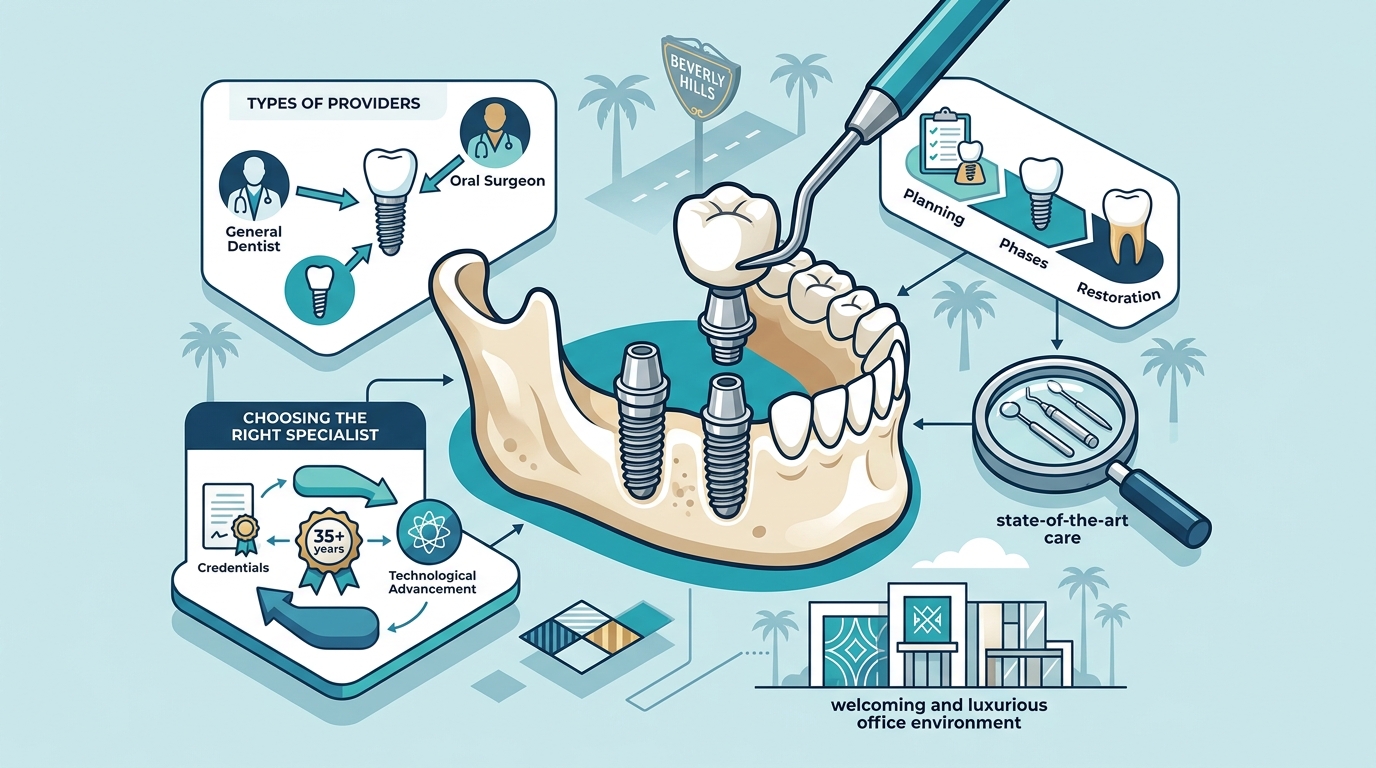
Phase 1: Consultation and Planning
Phase 2: Implant Placement
During the surgical phase, the dentist places the titanium implant into the jawbone. This is usually done under local anesthesia, and many patients report minimal discomfort. The implant acts as a root for the new tooth. The surgery itself is often quick, but the healing process takes several months.
Phase 3: Osseointegration and Restoration
Osseointegration is the biological process where the bone fuses with the implant. This typically takes three to six months. Once the implant is stable, an abutment is attached, and the final crown is placed. The crown is custom-made to match the color and shape of your natural teeth, ensuring a seamless aesthetic result.
Cost and Insurance Considerations
The cost of dental implants in Beverly Hills can vary widely based on the complexity of the case and the materials used. While insurance coverage for implants is limited, many plans cover a portion of the procedure if deemed medically necessary. It is important to discuss financial options during your initial consultation.
| Factor | Impact on Cost | Notes |
|---|---|---|
| Number of Implants | Higher | Full-arch restorations cost more than single implants. |
| Bone Grafting | Higher | Required if bone density is insufficient. |
| Provider Expertise | Higher | Experienced specialists may charge more for complex cases. |
How to Choose the Right Specialist
Selecting the right provider involves more than just checking credentials. You want a dentist who listens to your concerns and explains the procedure clearly. Here are key factors to consider when making your decision.
Credentials and Training
Look for providers who have completed additional training in implantology. Board certification in oral surgery or prosthodontics is a strong indicator of expertise. Dr. Bercovitch’s extensive background in cosmetic and restorative dentistry makes him a reliable choice for patients seeking aesthetic perfection.
Technology and Equipment
Modern dental practices use digital imaging and 3D planning software to enhance precision. These technologies can reduce surgery time and improve outcomes. A practice that invests in state-of-the-art equipment is likely to provide a smoother and more comfortable experience.
Office Environment and Patient Care
The atmosphere of the office matters. A welcoming and luxurious environment can help reduce anxiety. Patients at Earl Bercovitch, DDS often appreciate the personalized attention and the commitment to comfort that defines the practice.
Key Takeaways
- Experience is a critical factor; look for providers with a long history of successful outcomes.
- The implant process involves placement, osseointegration, and restoration, taking several months in total.
- Cost varies based on complexity, materials, and the need for bone grafting.
- Digital technology and 3D planning enhance precision and improve patient comfort.
- Insurance coverage for implants is limited, so discuss financing options early.
- Choose a provider who prioritizes communication, transparency, and a welcoming office environment.
Frequently Asked Questions
How long do dental implants last?
With proper care, dental implants can last a lifetime. The crown may need replacement after 10 to 15 years, but the implant itself is designed to be permanent.
Is the implant surgery painful?
Most patients report minimal discomfort during and after the procedure. Local anesthesia is used, and pain management options are available for post-operative care.
Can I get implants if I have gum disease?
Gum disease must be treated before implant placement. A healthy foundation is essential for the success of the implant.
How much do dental implants cost in Beverly Hills?
Costs vary widely. Single implants can range from several thousand dollars, while full-arch restorations are more expensive. Consult with a provider for a personalized estimate.
Do I need a bone graft?
A bone graft is needed if you have significant bone loss. Your dentist will assess your bone density during the consultation to determine if this step is necessary.
How should I care for my implants?
Care for implants is similar to caring for natural teeth. Brush twice a day, floss daily, and attend regular dental check-ups to maintain their health.