

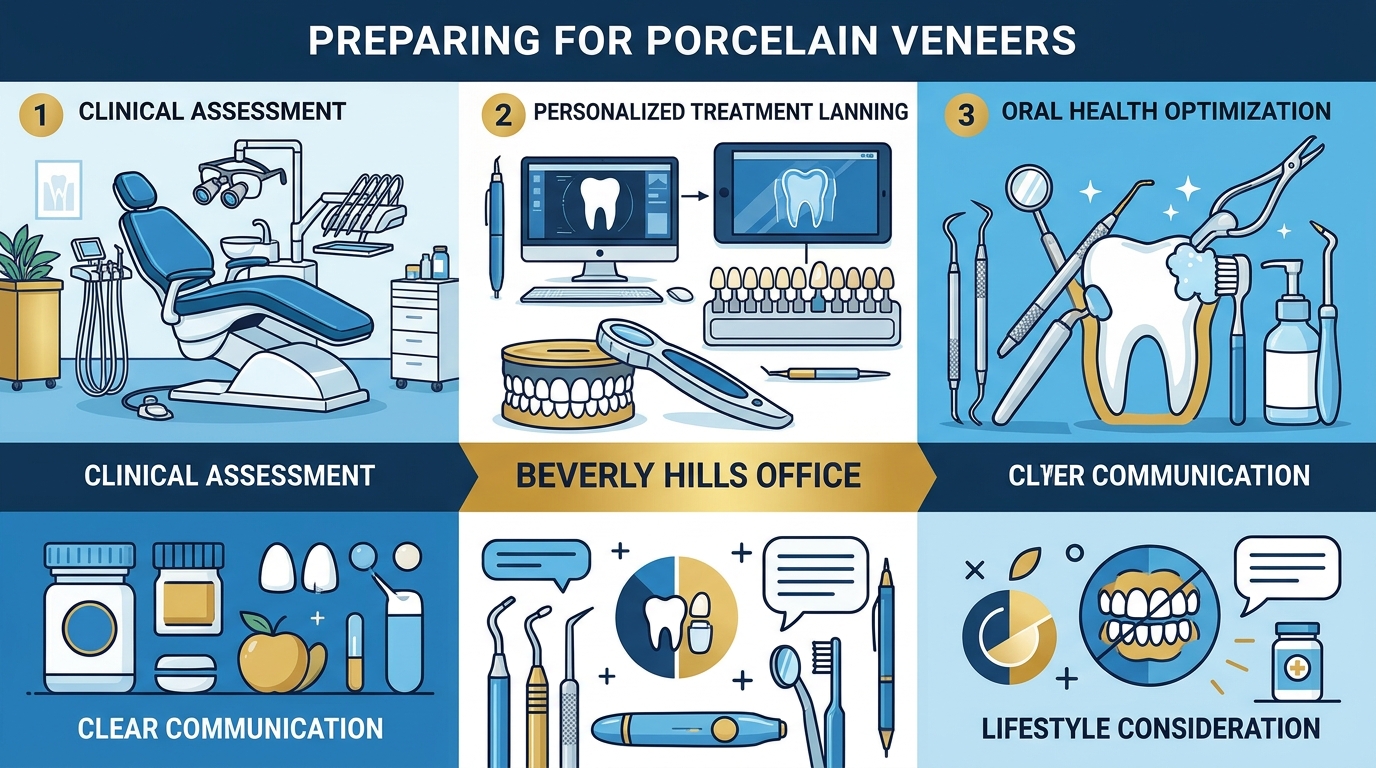
Preparing for porcelain veneers requires a combination of clinical assessment, lifestyle adjustments, and clear communication with your dental provider. At Earl Bercovitch, DDS, we guide patients through a structured process to ensure optimal outcomes for their smile. This preparation phase is critical for both the longevity of the restoration and the aesthetic result you desire.
1. Schedule a Comprehensive Diagnostic Consultation
Establish a baseline for your oral health and aesthetic goals. A diagnostic consultation is the first step in the veneer journey. During this visit, your dentist will examine your teeth, gums, and bite to determine if you are a suitable candidate. This assessment helps identify any underlying issues that must be addressed before veneers can be placed.
2. Address Existing Dental Health Issues
Resolve cavities, gum disease, or decay before restoration. Porcelain veneers are a cosmetic solution, not a cure for active dental disease. If you have untreated cavities or periodontal issues, they must be treated first. Ensuring a healthy foundation is vital for the success of the veneers.
3. Discuss Your Aesthetic Goals and Expectations
Align your vision with realistic clinical outcomes. Communication is key to a successful cosmetic procedure. You should discuss the shape, color, and size of your desired smile with your provider. Understanding the limitations of veneers helps set realistic expectations for the final result.
4. Consider Professional Teeth Whitening
Ensure your natural teeth match the shade of the veneers. Veneers cannot be whitened after they are placed. If your natural teeth are darker than the shade you want for your veneers, professional whitening should be performed beforehand. This ensures a uniform and harmonious smile.
5. Maintain Rigorous Oral Hygiene
6. Adjust Your Lifestyle Habits
Identify habits that may damage your new veneers. Certain habits, such as chewing ice, biting nails, or grinding teeth, can compromise veneers. Discuss these habits with your dentist to determine if a night guard or other protective measures are necessary. Making these adjustments before the procedure can extend the life of your restoration.
7. Plan for Temporary Veneers and Aftercare
Understand the timeline and care requirements for temporary restorations. After the final impressions are taken, you may receive temporary veneers while the permanent ones are fabricated. It is important to know how to care for these temporaries and what to expect during the waiting period. Planning for this phase ensures a smooth transition to your final smile.
Choosing the Right Approach
When preparing for porcelain veneers, the most important factor is choosing a provider who prioritizes your long-term oral health. At Earl Bercovitch, DDS, we combine over 35 years of experience with a personalized approach to ensure your preparation is thorough and your results are natural-looking. We encourage patients to be proactive in their preparation to achieve the best possible outcome.
Frequently Asked Questions
How long does the preparation process for porcelain veneers take?
The preparation process typically involves two to three appointments. The first is for consultation and diagnosis, the second for tooth preparation and impressions, and the third for the final placement. The timeline can vary depending on individual needs.
Do I need to whiten my teeth before getting veneers?
It is often recommended to whiten your natural teeth before getting veneers. Since veneers cannot be whitened, matching the shade of your natural teeth to the veneers ensures a uniform smile. Your dentist will advise you on the best timing for whitening.
Are porcelain veneers permanent?
Porcelain veneers are a long-lasting solution, but they are not permanent. They typically last between 10 and 15 years, depending on care and maintenance. Regular dental check-ups and good oral hygiene are essential to maximize their lifespan.
What should I avoid eating before my veneer appointment?
There are no specific dietary restrictions before the appointment, but it is important to maintain good oral hygiene. Avoiding sugary foods and drinks can help keep your teeth clean and healthy before the procedure.
Can I get veneers if I have gum disease?
Gum disease must be treated before veneers can be placed. Active gum disease can affect the stability and appearance of the veneers. Your dentist will address any periodontal issues during the preparation phase.
How much does it cost to prepare for porcelain veneers?
The cost of preparation varies depending on the specific treatments required, such as whitening or gum treatment. At Earl Bercovitch, DDS, we provide detailed estimates during your consultation to help you plan for the investment.