
Many patients assume the quoted price for a dental implant covers the entire treatment. In reality, several additional procedures and fees often arise during the process. Understanding these potential extras helps you budget accurately and avoid surprises at the dental office.
1. Bone Grafting
2. Sinus Lift
3. Tooth Extractions
Removing a damaged tooth before implant placement is a separate fee. If you still have a tooth that is too decayed or damaged to save, it must be extracted before the implant can be placed. This extraction is not always included in the base implant price. Dr. Bercovitch performs these extractions with care to preserve as much bone as possible for the subsequent implant procedure. Planning for this upfront helps you understand the total timeline and cost.
4. Custom Abutments
5. Advanced Imaging
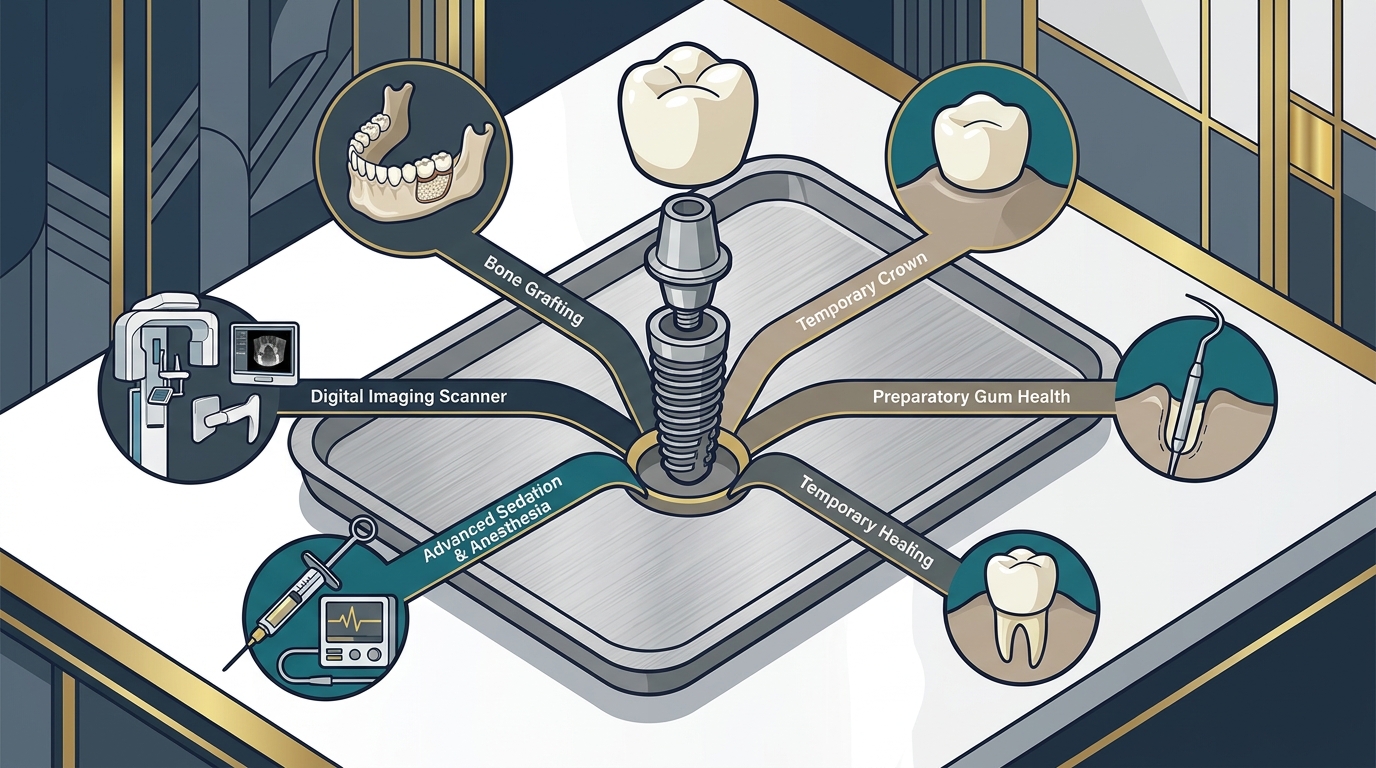
3D CBCT scans provide detailed views that 2D X-rays cannot. A cone beam computed tomography scan is a 3D imaging tool that maps the density and structure of your jawbone. This technology is essential for planning the exact depth and angle of the implant. It helps avoid critical structures like nerves and sinuses, reducing the risk of complications. While this imaging adds to the initial cost, it is a standard of care for safe and precise implant placement in complex cases.
6. Temporary Teeth
Temporary crowns or bridges may be needed while the implant heals. During the osseointegration phase, where the implant fuses with the bone, you may need a temporary tooth to maintain your smile. This is particularly relevant if the implant is in a visible area. The cost of these temporary restorations is separate from the final crown. They ensure you do not have a gap in your smile while the permanent solution is being prepared and placed.
7. Long-Term Maintenance
Implants require regular professional cleaning and check-ups to last a lifetime. Although implants do not decay, the surrounding gum tissue can still develop disease. Regular dental cleanings and exams are necessary to monitor the health of the implant and the adjacent natural teeth. Neglecting this maintenance can lead to peri-implantitis, a condition that can compromise the implant. Budgeting for ongoing care ensures your investment remains secure and functional for decades.
Choosing the Right Approach
The best way to manage these costs is through a comprehensive treatment plan. Discuss every potential procedure with your dentist before starting. At Earl Bercovitch, DDS, we provide transparent estimates that outline all necessary steps. This clarity allows you to make informed decisions about your oral health and financial planning.
Frequently Asked Questions
Does insurance cover the hidden costs of dental implants?
Most dental insurance plans cover a portion of the implant crown but rarely the implant post or surgical procedures like bone grafting. You should check your specific policy details to understand what is covered. Some medical insurance plans may cover implants if they are deemed medically necessary due to trauma.
How long does a bone graft take to heal?
Bone grafts typically require three to six months to heal and integrate with the existing bone. This healing period must be completed before the implant can be placed. The timeline can vary depending on the size of the graft and your individual healing response.
Are same-day implants possible if I need a bone graft?
Generally, no. If a bone graft is required, you must wait for the bone to heal before the implant can be placed. Same-day implants are usually reserved for patients with sufficient bone density who do not need additional surgical procedures.
What is the difference between a stock and custom abutment?
A stock abutment is a pre-made connector, while a custom abutment is milled specifically for your tooth and gum line. Custom abutments often provide a more aesthetic result and better fit, which can be crucial for visible front teeth.
How often do I need to see the dentist after getting an implant?
You should continue to visit the dentist every six months for routine cleanings and exams. This schedule helps monitor the health of the implant and surrounding tissues, ensuring the longevity of your restoration. Learn more: Home Earl Bercovitch DDS.