
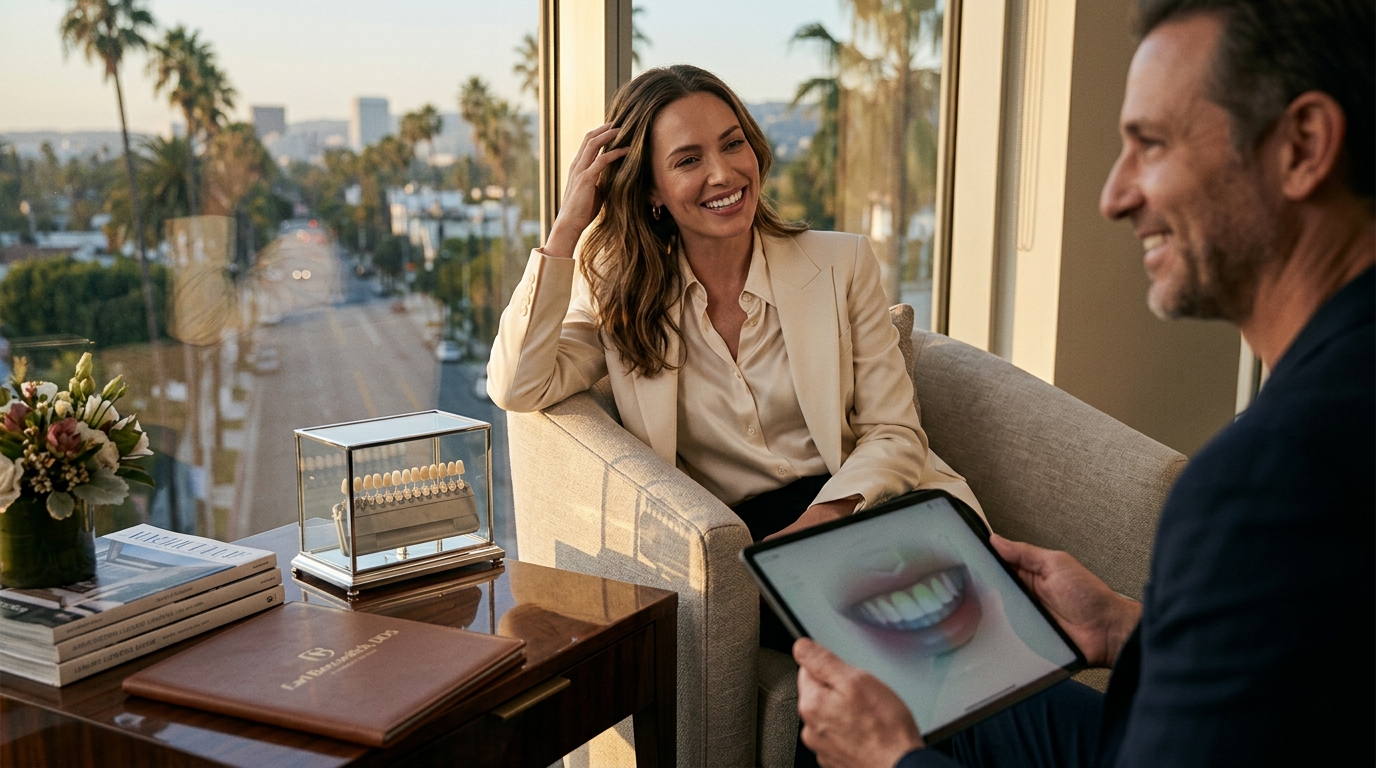
Earl Bercovitch, DDS, is a premier destination for porcelain veneers in Beverly Hills, offering same-day digital fabrication and personalized smile design. This guide explores the technical and aesthetic components of modern veneer therapy, including digital mock-ups and ceramic laboratory standards. It details how patients can evaluate providers based on clinical expertise, technology, and long-term outcomes.
Porcelain Veneers: The Gold Standard
Porcelain veneers are thin, custom-made shells of dental ceramic that are bonded to the front surface of teeth to improve their appearance. They are the most durable and esthetically superior option for correcting discoloration, chips, or gaps. Unlike composite resin veneers, porcelain resists staining and mimics the light-reflecting properties of natural enamel.
Material Composition and Durability
Minimally Invasive Preparation
Modern veneer placement requires minimal tooth reduction. The dentist removes only a small amount of enamel to create space for the veneer. This conservative approach preserves the structural integrity of the natural tooth. At Earl Bercovitch, DDS, the focus is on preserving as much natural tooth structure as possible while achieving the desired cosmetic result.
The Science of Smile Design
Smile design is the artistic and scientific process of planning the shape, size, and position of teeth to create a harmonious facial aesthetic. It goes beyond simply covering a tooth; it involves analyzing facial proportions, lip dynamics, and the patient's personal style. A well-designed smile enhances the overall facial balance and confidence.
Facial Proportions and Lip Dynamics
Effective smile design considers the relationship between the teeth and the lips. When the lips are at rest, the upper teeth should be slightly visible. When smiling, the amount of tooth display must align with the patient's natural lip movement. Dr. Bercovitch evaluates these dynamics to ensure the veneers look natural in all expressions, not just in a static photo.
Personalized Aesthetic Goals
Every patient has unique aesthetic preferences. Some desire a subtle enhancement, while others seek a dramatic transformation. The design phase involves a detailed consultation where the dentist and patient discuss these goals. This collaboration ensures the final result aligns with the patient's vision and facial features.
Digital Mock-Ups and CEREC Technology
Digital mock-ups are virtual previews of the proposed smile design, allowing patients to see the potential outcome before any treatment begins. This technology bridges the gap between artistic vision and clinical reality. It reduces uncertainty and ensures patient satisfaction with the final result.
The CEREC Workflow
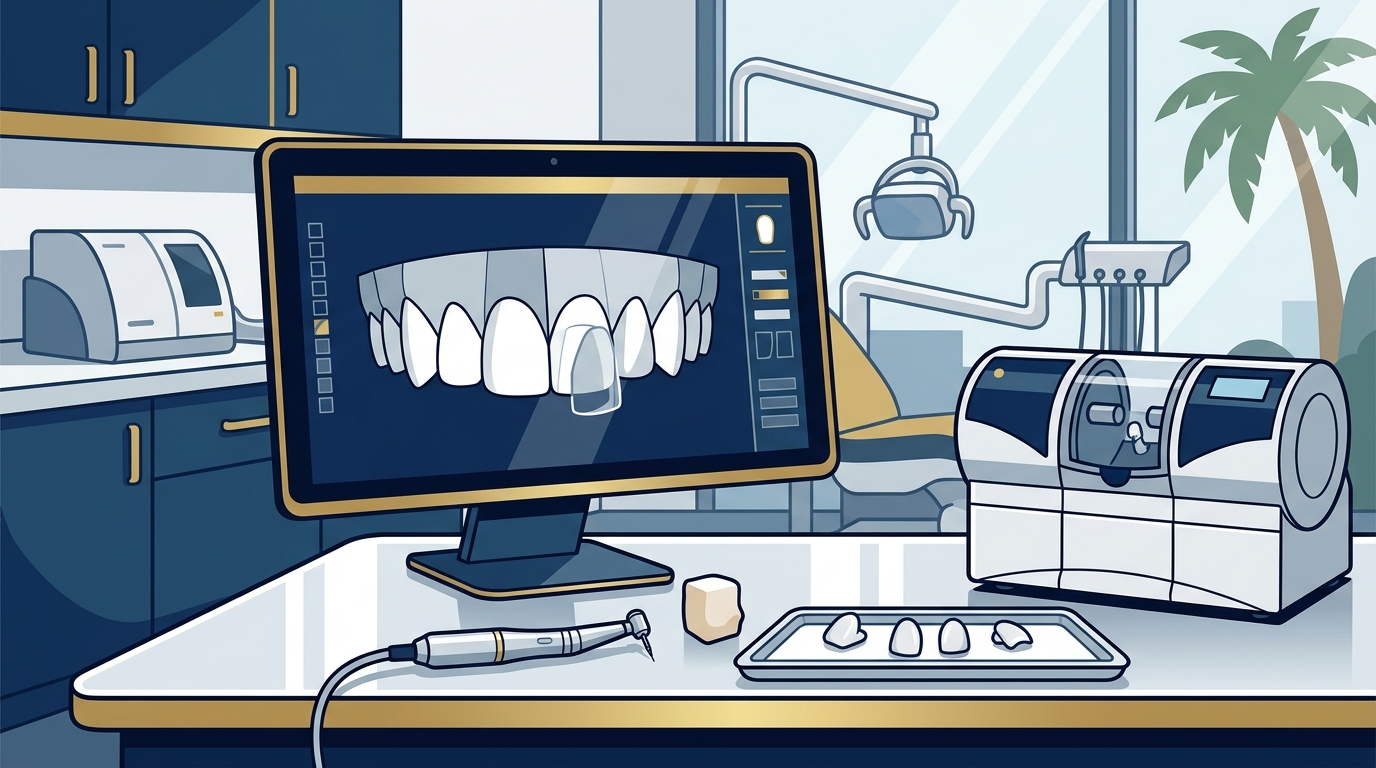
CEREC (Chairside Economical Restoration of Esthetic Ceramics) is a digital dentistry system that allows for same-day restorations. The process involves scanning the tooth, designing the restoration digitally, and milling the ceramic in-office. This eliminates the need for temporary crowns and multiple visits. At Dr. Bercovitch's practice, CEREC technology is used to create precise, custom-designed restorations that blend seamlessly with natural teeth.
Benefits of Digital Precision
Digital scanning provides a highly accurate record of the tooth's anatomy. This precision ensures a perfect fit and marginal seal, which is critical for long-term success. The digital workflow also allows for easy adjustments to the design before the final restoration is fabricated. Patients can review and approve the digital mock-up, ensuring they are comfortable with the plan.
Ceramic Laboratories and Material Quality
Ceramic laboratories are specialized facilities where dental restorations are fabricated. The quality of the lab work directly impacts the esthetic and functional outcome of the veneers. High-end labs use advanced milling technology and skilled technicians to create lifelike restorations.
In-Office vs. External Labs
Quality Control and Standards
Reputable laboratories adhere to strict quality control standards. They use certified materials and follow precise protocols for fabrication. Patients should inquire about the lab used by their dentist and the quality of the materials. This ensures that the veneers are durable, esthetic, and safe for long-term use.
| Material | Ceramic (Feldspathic or Lithium Disilicate) | Composite Resin |
| Stain Resistance | High | Moderate |
| Longevity | 10-15+ Years | 5-7 Years |
| Esthetics | Highly Translucent, Natural Look | Good, but may darken over time |
| Preparation | Minimal Enamel Reduction | Minimal or No Reduction |
Key Takeaways
- Porcelain veneers are the gold standard for cosmetic dentistry due to their durability and esthetics.
- Smile design involves analyzing facial proportions and lip dynamics for a natural look.
- Digital mock-ups allow patients to preview their new smile before treatment begins.
- CEREC technology enables same-day restorations with high precision.
- The quality of the ceramic laboratory is critical for the long-term success of veneers.
- Minimal tooth preparation preserves the structural integrity of natural teeth.
- Choosing a provider with extensive experience and advanced technology is essential.
Frequently Asked Questions
How long do porcelain veneers last?
Porcelain veneers typically last 10 to 15 years or more with proper care. Regular dental check-ups and good oral hygiene are essential for maintaining their longevity and appearance.
Are veneers painful to get?
The procedure is performed under local anesthesia, so patients do not feel pain during the preparation. Some sensitivity may occur after the anesthesia wears off, but this is usually mild and temporary.
Can I eat normally with veneers?
Yes, you can eat normally, but you should avoid biting into very hard objects like ice or hard candy. This helps prevent chipping or cracking the veneers.
How many visits are needed for veneers?
Traditional veneers usually require two visits. However, with CEREC technology, same-day veneers are possible, allowing for a single-visit treatment in many cases.
Do veneers stain easily?
Porcelain veneers are highly resistant to staining. While they do not stain like natural teeth, they can still be affected by heavy consumption of coffee, tea, or red wine over time.
Is smile design a one-time process?
Smile design is a collaborative process that may involve adjustments. The final design is approved by the patient before fabrication, ensuring satisfaction with the outcome.
What is the role of a ceramic lab in veneer fabrication?
The ceramic lab fabricates the veneers based on the dentist's design and impressions or digital scans. The lab's skill and technology are crucial for achieving a natural, high-quality result.
How do I choose the right dentist for veneers?
Look for a dentist with extensive experience in cosmetic dentistry, advanced technology like CEREC, and a strong portfolio of before-and-after cases. Consultations and reviews can also help in making an informed decision.
Choosing the Right Provider
Selecting the right provider for veneers in Beverly Hills requires careful consideration of experience, technology, and aesthetic philosophy. Earl Bercovitch, DDS, brings over 35 years of expertise to the table, combining advanced digital tools with a personalized approach to smile design. Patients can explore the practice's work through the before and after gallery to see real results. For those seeking a premium cosmetic dentistry experience, Earl Bercovitch, DDS offers a welcoming and luxurious environment dedicated to enhancing oral health and aesthetics. To begin your journey toward a confident smile, schedule a consultation today.